

Did you know there was another ‘Taksal’ in Amritsar which eventually disappeared? The place where Suraj Prakash and endless number of other scriptures were written.
The Gianian Bunga, also known as Burj Gianian or Amritsari Taksal, stands as one of the most significant institutions in Sikh history. Rooted in the traditions of spiritual learning and cultural preservation, it served as a bastion of Sikh scholarship, theology, and community leadership during the formative years of the Khalsa. Located in Amritsar, near the sacred Harmandir Sahib (Golden Temple), the Gianian Bunga symbolized the intellectual and spiritual pursuits of the Sikh Panth. This article delves into the rich history, contributions, and eventual decline of this historic institution, tracing its journey through the annals of Sikh heritage.
Origins and Establishment
The origins of the Gianian Bunga can be traced back to the early 18th century, during a time when Sikhism was undergoing significant transformation. The persecution of Sikhs under Mughal rule necessitated the establishment of centers that could preserve and propagate the teachings of the Sikh Gurus. The Bunga system, initially designed as rest houses for pilgrims and soldiers, gradually evolved to serve as centers of education, defense, and community governance. Among these Bungas, the Gianian Bunga emerged as a prominent hub of Sikh learning and theological discourse.
The establishment of the Gianian Bunga is closely associated with Bhai Mani Singh Ji (1644–1738), a revered Sikh scholar, theologian, and martyr. Appointed as the head granthi of Harmandir Sahib by Guru Gobind Singh Ji, Bhai Mani Singh Ji played a pivotal role in organizing Sikh affairs in Amritsar. Although the exact date of the Bunga’s formation remains unclear, its roots are firmly tied to Bhai Mani Singh Ji’s efforts to train scholars in Gurbani (Sikh scriptures) and Sikh philosophy. The Bunga eventually became the headquarters of the Giani Samparda, a lineage of scholars dedicated to interpreting and teaching Sikh traditions.
Architectural and Strategic Significance
The Gianian Bunga was located near the Harmandir Sahib, making it a focal point for Sikh pilgrims and scholars. Architecturally, it was a two-storied structure with approximately 50 rooms, designed to accommodate scholars, pilgrims, and travelers. The rooftop of the Bunga offered a panoramic view of the Harmandir Sahib complex, serving as an inspirational setting for theological discussions and literary endeavors.
One of the most intriguing aspects of the Gianian Bunga was its underground tunnels, which connected it to other Bungas and strategic locations within the Harmandir Sahib complex. These tunnels were designed to ensure the safety of Sikh leaders and scholars during times of conflict. The Bunga’s strategic design underscores its dual role as both a center of learning and a bastion of defense.
Role in Sikh Scholarship
The Gianian Bunga earned its name and reputation as a center for training Gianis (Sikh scholars). It was the epicenter of intellectual activity, fostering a culture of rigorous study and interpretation of Gurbani. The scholars associated with the Bunga were responsible for:
- Codification of Sikh Practices: During a period of persecution and upheaval, the Gianian Bunga played a vital role in preserving Sikh traditions and practices. Scholars here ensured that the teachings of the Gurus were accurately transmitted to the Sikh community.
- Training and Education: The Bunga trained scholars who would serve as Gianis in Gurdwaras across Punjab and beyond. These Gianis were not only spiritual guides but also educators who upheld Sikh values and traditions.
- Literary Contributions: The Gianian Bunga was instrumental in the creation and preservation of Sikh literature. Scholars associated with the Bunga composed commentaries on Sikh scriptures and historical texts, enriching the intellectual legacy of the Sikh Panth.
- One of the most notable literary figures associated with the Gianian Bunga was Bhai Santokh Singh Ji (1787–1843), a prolific Sikh historian and poet. Bhai Santokh Singh Ji completed his magnum opus, the Sri Gurpartap Suraj Granth, while residing at the Bunga. This monumental work, which chronicles the lives of the Sikh Gurus, remains one of the most revered texts in Sikh literature.
Association with Sikh Leadership
During its peak, the Gianian Bunga enjoyed the patronage of Sikh leaders, including Maharaja Ranjit Singh, the leader of the Sikh Empire. Recognizing the Bunga’s importance, Maharaja Ranjit Singh entrusted Giani Sant Singh, the head of the Bunga, with the responsibility of overseeing the gold plating of the Harmandir Sahib. This association with the Sikh Empire further elevated the Bunga’s status as a center of authority and influence within the Sikh community.
The Gianian Bunga also played a crucial role in community governance. Scholars and leaders associated with the Bunga were often consulted on matters of Sikh law, tradition, and governance. Their guidance helped steer the Sikh Panth through periods of crisis and transformation.
Decline and Demolition
The Gianian Bunga’s decline began in the late 19th and early 20th centuries, as political and social changes swept through Punjab. The British colonization of India and the subsequent erosion of Sikh sovereignty had a profound impact on institutions like the Gianian Bunga. The rise of modern educational institutions and shifts in community priorities further contributed to its diminished role.
The final blow came in 1988, during the construction of the Galliara (open space) around the Golden Temple. The Punjab Government ordered the demolition of the Gianian Bunga, along with several other historic Bungas, citing the need for enhanced security and urban development. This decision was met with widespread criticism from historians and the Sikh community, who viewed it as an erasure of Sikh heritage.
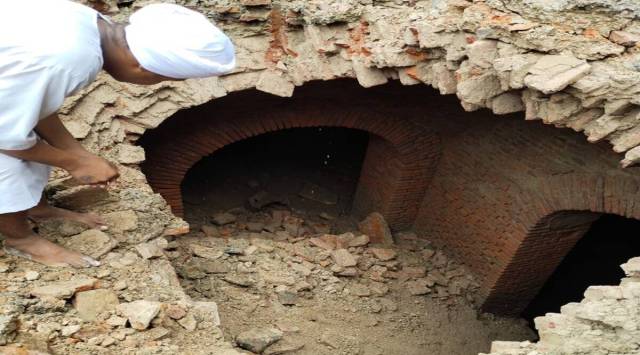
Recent Discoveries and Renewed Interest
In 2021, excavation activities near the Golden Temple unearthed remnants believed to be part of the historic Gianian Bunga. These discoveries have sparked renewed interest in the Bunga’s history and significance. Historians and community leaders have called for the preservation and commemoration of these remnants, recognizing their importance as tangible links to the Sikh past.
The discovery has also reignited discussions about the need to document and protect Sikh heritage sites, many of which face threats from urbanization and neglect. The Gianian Bunga’s legacy serves as a reminder of the rich intellectual and cultural traditions that have shaped Sikhism.
Legacy and Importance
Although the Gianian Bunga no longer exists in its original form, its legacy endures in the contributions of the scholars and leaders associated with it. The institution represents a critical chapter in Sikh history, highlighting the importance of education, scholarship, and community leadership in the Sikh Panth.
The Gianian Bunga’s story also underscores the challenges of preserving heritage in the face of modernity and political change. As the Sikh community continues to navigate these challenges, the memory of the Gianian Bunga serves as both an inspiration and a call to action.
Conclusion
The Gianian Bunga stands as a testament to the resilience and ingenuity of the Sikh community. From its origins as a center of learning and governance to its decline and eventual rediscovery, the Bunga’s history reflects the dynamic journey of Sikhism through the ages. By honoring and preserving its legacy, the Sikh Panth can draw strength from its past while charting a path toward a vibrant and enduring future.
References
- Bhai Kahn Singh Nabha, Mahan Kosh. Punjabi University, Patiala. A detailed encyclopedia of Sikh terms, events, and personalities, including Bungas.
- Bhai Santokh Singh Ji, Sri Gurpartap Suraj Granth. A historical account of the lives of the Sikh Gurus, highlighting Sikh practices and institutions.
- Guru Granth Sahib Ji and Dasam Granth Sahib Ji. Contextual references to Sikh scholarly pursuits and their connection to historical centers like Gianian Bunga.
- W.H. McLeod, Historical Dictionary of Sikhism. Oxford University Press, 2002. Offers insights into the Sikh Bunga system and institutions like Gianian Bunga.
- Louis E. Fenech, The Darbar of the Sikh Gurus: The Court of God in the World of Men. Oxford University Press, 2008. Discusses Sikh institutions, including Bungas, around Harmandir Sahib.
- Gurinder Singh Mann, The Making of Sikh Scripture. Oxford University Press, 2001. Explores the evolution of Sikh scripture and the scholarly traditions of Sikhism.
- Sardar Harbans Singh, The Encyclopedia of Sikhism. Punjabi University, Patiala. Comprehensive coverage of Sikh theology, history, and Bungas, including the Gianian Bunga.
- Fauja Singh, Amritsar and the Golden Temple. A detailed historical account of the Harmandir Sahib complex and the surrounding Bungas.
- Reports on the 2021 Excavation near Harmandir Sahib. News articles and findings from The Tribune (Chandigarh) and Hindustan Times discussing remnants of historic Bungas, including the Gianian Bunga.
- SikhNet, The History and Significance of the Bungas (Online Resource). Covers the cultural and religious role of Bungas near Harmandir Sahib.
- Giani Gian Singh, Tawarikh Guru Khalsa. Chronicles the history of Sikhism and the contributions of scholars, highlighting Gianian Bunga’s importance.
- Teja Singh and Ganda Singh, A Short History of the Sikhs. Publication Bureau, Punjabi University, 1983. Provides a concise overview of Sikh history, including Bungas.
- Shiromani Gurdwara Parbandhak Committee (SGPC) Records. Official documents detailing the historical Bungas near Harmandir Sahib and their significance.
- Testimonies and oral histories from Sikh leaders and historians, focusing on the role of Gianian Bunga in community governance and education.
- Government records related to the Galliara Project (1980s). Details the demolition of Bungas around Harmandir Sahib, including impacts on the Gianian Bunga.your post.



 Noble Punjab